
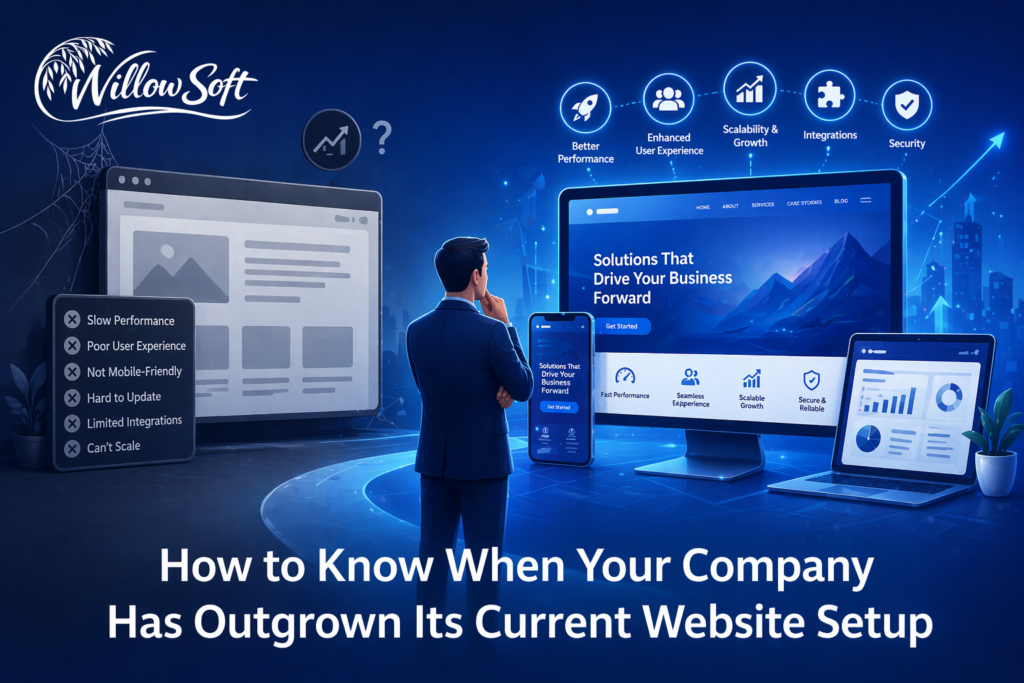
A website does not need to break completely to stop being the right fit for a business. In many cases, the warning signs appear much earlier. Simple updates start taking too long, new landing pages become harder to launch, small edits depend on outside help, and the site begins to feel like a system the company works around instead of a tool that supports growth.
That is usually the point when a business has outgrown its current website setup.
Simple updates start turning into heavy tasks
One of the clearest signs is that routine work no longer feels routine. A company wants to refresh service pages, update messaging, publish new content, or adjust a call to action, but every change feels slower than it should. What once seemed manageable starts creating friction across marketing, content, and operations.
This often happens gradually. At an earlier stage, a complex website setup may feel acceptable because the business is changing less often. But once the company begins testing offers more actively, refining positioning, or launching new pages more frequently, the same setup can start slowing execution instead of supporting it.
The website stops matching the way the business works
A company can also outgrow its website when its internal workflow changes. Teams may need faster publishing, easier editing, cleaner page management, or more direct control over updates. If the current platform makes those things difficult, the issue is no longer just technical. It becomes operational.
At that point, the more important question is not whether the website still functions, but whether it still fits the business. A site can remain live and technically stable while no longer serving the speed, flexibility, or structure the company now needs.
Maintenance starts taking energy away from growth
Another strong signal is when maintenance begins competing with actual business priorities. Instead of using the website to support campaigns, test new offers, or improve communication, the team spends time managing plugins, resolving recurring issues, coordinating technical fixes, or delaying improvements because changes feel too cumbersome.
That is often when companies begin reviewing migration options. In many cases, the real problem is not that the old system is unusable, but that it demands more attention than it is worth. For businesses that want to simplify management and move away from a heavier WordPress workflow, a service like WordPresstoWix.pro can be relevant when the goal is to preserve important content while moving to a setup that is easier to handle day to day.
Usability problems start affecting business outcomes
When a website setup becomes harder to use, the impact is rarely limited to the internal team. It also affects visitors. Confusing navigation, outdated page structure, weak content hierarchy, and difficulty finding the right information can reduce the value the site creates for the business.
That is why usability remains such a useful lens for evaluating a website. Nielsen Norman Group’s article on growing a business website by fixing the basics first makes the point that clear content, simple navigation, and answers to customer questions have more business value than unnecessary complexity. That principle is especially relevant when a company is trying to decide whether its current setup is still helping or quietly getting in the way.
A rebuild is not always the first answer
Outgrowing a website setup does not automatically mean the company needs a full rebuild. Sometimes the better move is to look carefully at what is actually creating friction. Is it the editing process? The maintenance burden? The page structure? The speed of launching new content? The ability to support current marketing goals?
Once those issues are clear, the next step becomes easier to define. In some cases, a targeted cleanup is enough. In others, the company has clearly reached the point where a migration or platform change makes more sense than continuing to patch an outdated workflow.
Final thoughts
A business usually outgrows its website setup before the site fails in any dramatic way. The real signs are slower workflows, rising maintenance effort, reduced flexibility, and a growing mismatch between what the company needs and what the platform makes easy.
When those signs begin to accumulate, it is worth treating the website not as something that merely exists, but as part of how the business operates. If it no longer supports speed, clarity, and growth, then it may be time to change the setup rather than keep adapting the business to the limits of the site.